
🌊 Thailand's Monsoon Crisis: Understanding the Danger & Helping Those Affected

Thailand's Monsoon Crisis: Understanding the Danger & Helping Those Affected
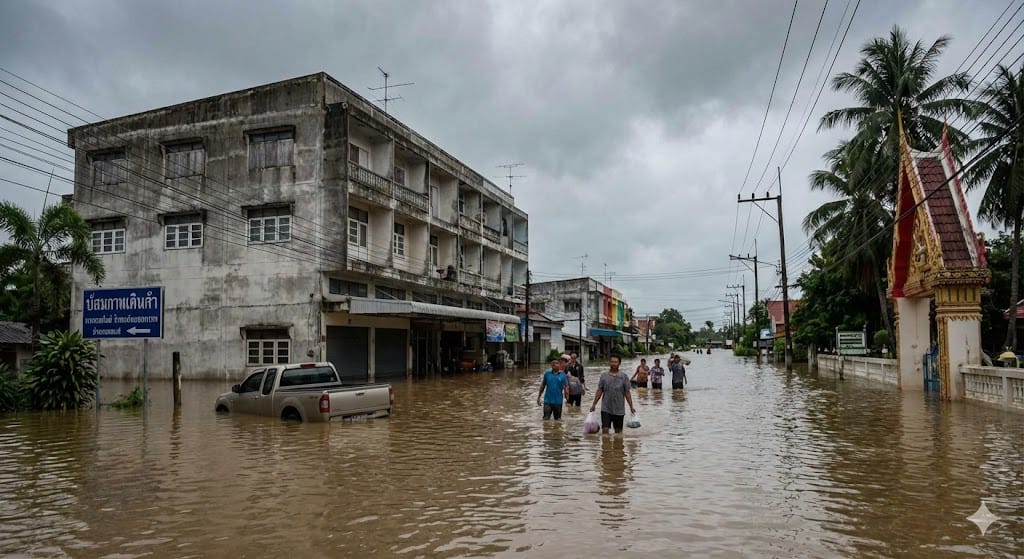
As of December 2025, Thailand is experiencing catastrophic flooding that has claimed over 160 lives, primarily in Songkhla province and Hat Yai district. Thousands have been left homeless, hospitals are damaged, and entire communities are underwater. This isn't a minor inconvenience—it's a genuine humanitarian crisis.
If you're in Thailand during monsoon season, you need to understand both the danger and your responsibility to stay informed and help where you can.
The Current Crisis (December 2025)
What's Happening Right Now
Southern Thailand is experiencing unprecedented flooding that experts are calling the worst in recent years. Hat Yai, Thailand's fourth-largest city, is submerged. Songkhla province has recorded at least 126 deaths. Hospitals are damaged and struggling to function. Rescue operations are ongoing in areas that were completely underwater just days ago.
This isn't theoretical flooding or "inconvenient weather." People are dead. Families have lost everything. Hospitals are treating the injured while dealing with their own flood damage.
If you're safe and reading this from your apartment or hotel, understand that others nearby are not safe. They're dealing with actual loss.
Who This Affects
The flooding primarily affects:
- Residents of southern Thailand (Songkhla, Phatthalung, Nakhon Si Thammarat)
- Low-income communities without proper infrastructure
- Migrant workers with limited resources
- Elderly people who can't evacuate
- People in rural areas with inadequate drainage systems
Western travelers and expats in Bangkok or tourist areas are generally less affected, but southern Thailand visitors or residents face real danger.
Understanding Monsoon Floods vs. Regular Rain
This Isn't Just Heavy Rain
Thailand's monsoon season (May-October, peaking August-September) brings extreme rainfall. But what happened in late November 2025 wasn't typical monsoon flooding—it was categorized by authorities as "unprecedented."
The difference:
- Normal monsoon: Heavy rain, some street flooding, manageable
- Monsoon flooding crisis: Rivers overflowing, entire neighborhoods submerged, infrastructure failures, deaths
When you hear "unprecedented," it means even locals who've lived through decades of monsoons are shocked by the scale.
The Physics of Dangerous Flooding
Understanding why flooding kills helps you respect the danger:
Water force: Just 15cm (6 inches) of moving water can knock an adult off their feet. 30cm can sweep away a car. People die trying to drive or wade through water that looks manageable.
Current and debris: Floodwater isn't clean water—it contains debris, sewage, chemicals, sharp objects. The current in fast-moving floodwater is deceptively strong and pulls in unpredictable directions.
Hidden hazards: You can't see what's beneath the surface. Holes, submerged objects, missing manhole covers, and broken infrastructure create invisible dangers.
Speed of rise: Flash flooding can rise meters in minutes. Areas that seemed fine can become death traps within an hour.
This is why "don't drive through floodwater" isn't a suggestion—it's a survival rule.
The Reality of Flooding Impact
Loss of Life
Over 160 confirmed deaths in Thailand from this flooding event. Most are:
- Elderly people trapped in their homes
- People swept away by currents while trying to reach safety
- Workers in flood-prone industrial areas
- People in vehicles that were swept downstream
Each death represents a family destroyed, a community grieving, lives ended.
Loss of Home and Property
Thousands of people have lost their homes. Everything they own is destroyed:
- Houses submerged in muddy water
- Personal belongings ruined
- Documents and family heirlooms gone
- No insurance, no safety net
Many of these people will struggle to rebuild for years.
Infrastructure Damage
Hospitals damaged and overwhelmed. Roads destroyed. Water treatment facilities compromised. Power systems offline in some areas. When critical infrastructure fails, the recovery is long and difficult.
Mental and Physical Health Impact
Survivors face:
- Disease from contaminated water exposure
- Injuries from debris
- Psychological trauma
- Loss and grief
- Uncertainty about the future
This doesn't disappear when the water recedes.
If You're in Thailand During This Crisis
Check if You're in a Danger Zone
High-risk areas (currently affected):
- Songkhla province
- Hat Yai district
- Phatthalung
- Nakhon Si Thammarat
- Areas near major rivers in other provinces
Check: Where exactly are you? If you're in an affected province, you need to take this seriously.
Monitor: Thai Meteorological Department (tmd.go.th), local news, and social media updates from locals in your area.
What You Should Actually Do
If you're in an affected area:
- Don't treat this as an adventure or photo opportunity
- Follow local evacuation orders immediately—not "when it gets bad," but when ordered
- Move to higher ground before water rises
- Don't drive through flooded areas
- Don't wade through floodwater
- Stay informed through local Thai news and authorities
- Help neighbors if you can do so safely
- Contact your embassy if you need evacuation assistance
If you're in a safer area but nearby:
- Check on any Thai friends or acquaintances
- Offer help if safe to do so
- Support local relief efforts
- Don't spread misinformation
If you're planning to visit Thailand:
- Avoid affected southern provinces right now
- Monitor the situation before traveling
- Reconsider if you have flexible dates
- If you must travel, stay in Bangkok, northern areas, or tourist zones that are less affected
Don't Be the Problem
What NOT to do:
- Don't post videos of suffering people for social media
- Don't treat the disaster as tourism content
- Don't drive through flooded areas "just to see"
- Don't ignore evacuation orders because you think it's overblown
- Don't refuse help from authorities
- Don't stay in your apartment if told to evacuate
Being a responsible visitor/resident means respecting the seriousness of the crisis.
How to Actually Help
Donate to Legitimate Organizations
Thai Red Cross Society: www.redcross.or.th
- Providing emergency shelter
- Medical assistance
- Search and rescue operations
International Organizations:
- Save the Children Thailand
- Doctors Without Borders
- World Vision Thailand
Local Thai NGOs:
- Verify legitimacy before donating
- Ask Thai friends which organizations they trust
- Check that donations actually reach affected areas
Volunteer (If Appropriate)
If you're in Thailand and want to help:
- Contact Thai Red Cross about volunteer opportunities
- Ask building management if community support is needed
- Help distribute supplies in your area if it's safe
- Support local recovery efforts once immediate crisis passes
Important: Only volunteer if you won't create more problems. Untrained people in disaster zones can actually hinder rescue operations.
Support Local Businesses
As recovery begins:
- Support local Thai businesses that are recovering
- Buy from vendors whose shops were damaged
- Be patient with slow service—people are dealing with loss
- Pay fair prices, don't try to exploit the situation
The Monsoon Season Reality (Going Forward)
This Will Happen Again
Monsoon season ends, but severe flooding will return. Climate change is making weather patterns more extreme. Thailand's infrastructure in some areas can't handle the volume of water.
If you're living in Thailand, you need to:
- Understand monsoon season timing (May-October)
- Know your neighborhood's flood risk
- Have emergency plans
- Stay informed during heavy rain periods
- Not take warnings lightly
The Bigger Picture
Thailand's flood issues aren't just about "heavy rain." They involve:
- Climate change making extreme weather more frequent
- Infrastructure that can't handle peak rainfall
- Urban development in flood-prone areas
- Inadequate warning systems in some regions
- Economic disparities (wealthy areas have better protection)
These are systemic problems that won't be solved quickly.
Respect the Severity
This Isn't Entertainment
Monsoon season isn't a "survival challenge" or an adventure. When people are dying and losing their homes, it's a tragedy that deserves respect.
If you're safe, be grateful. If you can help, do so responsibly. If you're affected, seek help and don't try to be a hero.
Learn From This
If you're visiting or living in Thailand:
- Take weather warnings seriously
- Don't drive through floodwater
- Help neighbors when you can
- Stay informed
- Respect the power of nature
- Understand that disasters affect real people
The casual tone many use about monsoons ("oh, it just rains a lot") doesn't reflect the reality that people die and communities are destroyed.
Moving Forward
Immediate (Next Weeks)
- Continue supporting relief efforts
- Stay informed about ongoing rescue operations
- Help community recovery if you're able
- Check on anyone you know in affected areas
- Respect people's grief and loss
Longer Term (Months/Years)
- Support economic recovery of affected communities
- Advocate for better infrastructure
- Be prepared for next monsoon season
- Help local communities prepare better
The Bottom Line
Thailand's monsoon crisis right now is serious and deadly. Over 160 people are dead. Thousands are homeless. Hospitals are damaged. This is real.
If you're in Thailand:
- Take it seriously
- Follow official guidance
- Help where you can
- Don't be reckless
- Respect those affected
If you're planning to visit:
- Consider postponing if dates are flexible
- Avoid affected southern provinces
- Check current conditions before traveling
If you're far away:
- Support relief organizations
- Spread accurate information
- Don't minimize the crisis
The monsoon will pass. The water will recede. But for thousands of Thais, the impact will last for years. Show respect for their suffering.
Resources:
- Thai Red Cross Society: redcross.or.th
- Thai Meteorological Department: tmd.go.th
- Your embassy's emergency services
- Local news for real-time updates


